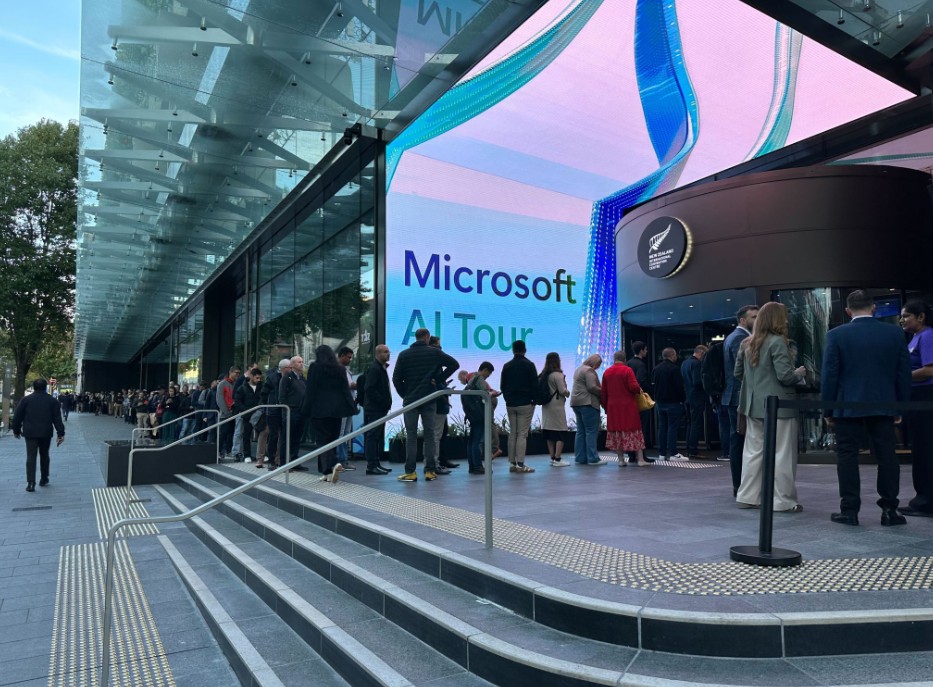
Auckland was buzzing yesterday. The queue outside the New Zealand International Convention Centre told you everything you needed to know about the appetite for AI in this country right now. The Microsoft AI Tour was oversubscribed and there was genuine feeling of excitement as Microsoft CEO Satya Nadella took to the stage with a theme of ‘AI Frontier for New Zealand’.
As someone leading product and marketing at a Microsoft cloud services partner, I found plenty of great insights to take away. I thought I’d share some with you! Let me know what you think.
1. The “Frontier Firm” as a mindset
If you haven’t yet absorbed Frontier Firm thesis, now is a good time. Microsoft describes a Frontier Firm as one that doesn’t simply adopt AI tools, but fundamentally redesigns how it operates around a model of human-agent collaboration. Summarising meeting notes in Copilot, running entire workflows through agents and observing their performance through natural language dashboards.
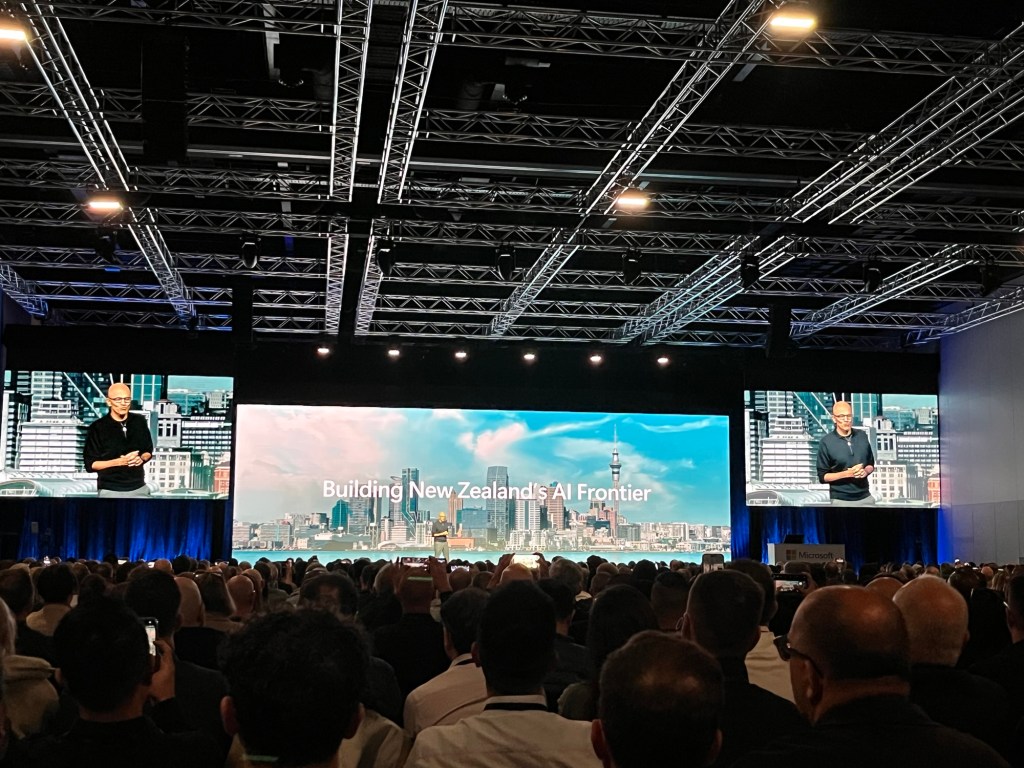
We heard from local companies like Fonterra, Spark, and Health NZ on their own journeys toward this model. What struck me most was Health NZ’s genuine focus on human outcomes, including deeply empathetic work supporting families whose children are critically ill. This is the version of AI I want to sell: the tools that free people to do the work that actually matters.
The telemetry capabilities shown through Copilot were also a standout. Observability and continuous improvement built into core infrastructure. If you can’t measure your agents, you can’t improve them.
2. Work IQ Is the Real Differentiator
One of Microsoft’s most important recent moves is Work IQ, the intelligence (business context) layer built into Microsoft 365 Copilot that gives it context about how you work, who you work with, and what you’re building. Combined with the new Copilot Cowork capability (built in partnership with Anthropic), this is Microsoft’s answer to the criticism that AI tools lack organisational memory.
The question is no longer “should we use Copilot?” or “How do we train our people”. It’s “how do we make sure our clients’ data foundations are good enough to unlock Work IQ?” Which leads me to the next point.
3. Good Foundations Still Matter More Than Anyone Wants to Admit
Sarah Carney, CTO ANZ, made the point plainly: AI is only as good as the data underneath it. Unifying data remains a critical and often underinvested, a precondition for any meaningful AI deployment. Microsoft is positioning itself as the platform that holds this together, and as a managed service partner, that’s where much of our value sits.
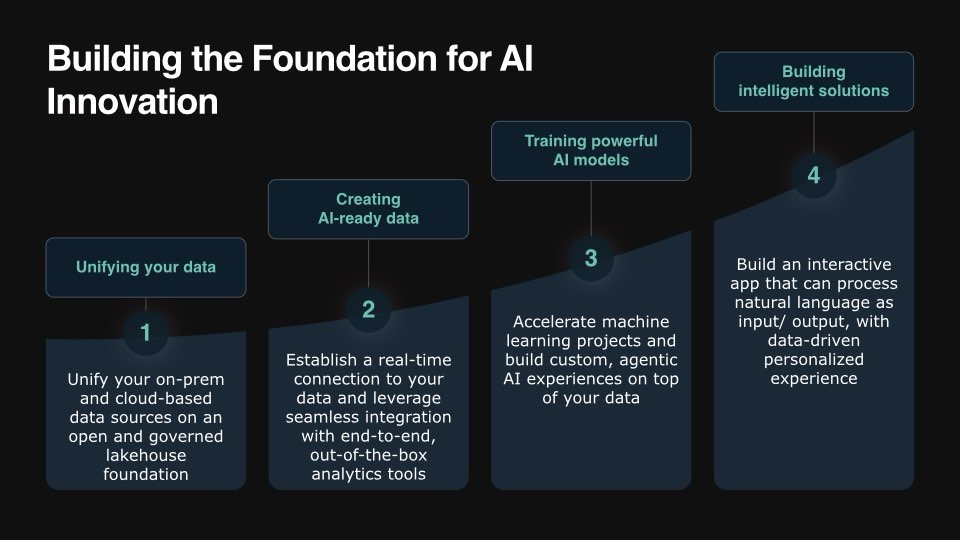
There’s an uncomfortable truth here that came up repeatedly in corridor conversations though: organisations are seeing strong ROI on initial AI deployments, but very few building complex AI services are budgeting for the continuous evolution of them. The attitude is largely “we’ll cross that bridge when we come to it.” For those of us in the business of long-term technology relationships, this is both a risk and an opportunity. The clients who build sustainable data architecture and budget for continuous improvement, observability and strong support now will compound their AI advantage.
4. The Model Diversity Story Is Important
One detail that didn’t get enough airtime on the day, but deserves a spotlight: Microsoft 365 Copilot is explicitly model-diverse by design. Anthropic’s Claude is now available in mainline Copilot chat. Companies are also pooling together to build specialised models, everything from cancer detection to industry-specific workflows and Microsoft’s platform architecture is designed to accommodate this heterogeneous environment.
For New Zealand companies, this matters. They’re not locked into a single AI vendor’s worldview whether they use Dynamics 365, SAP or Salesforce. The best model for the job gets used, regardless of who built it.
5. The Change Management Problem Is as Big as the Technology Problem
Perhaps my favourite moment of the day was a shoutout to the book How to Start a Cult — referenced by AUT in the context of building internal AI adoption. Having done my masters in diffusion of innovation, this hit close to home. Bold vision, consistent storytelling, low-friction daily exposure (“AI at lunchtime”), and continuous reinforcement, these are the mechanics of successful internal change programmes.
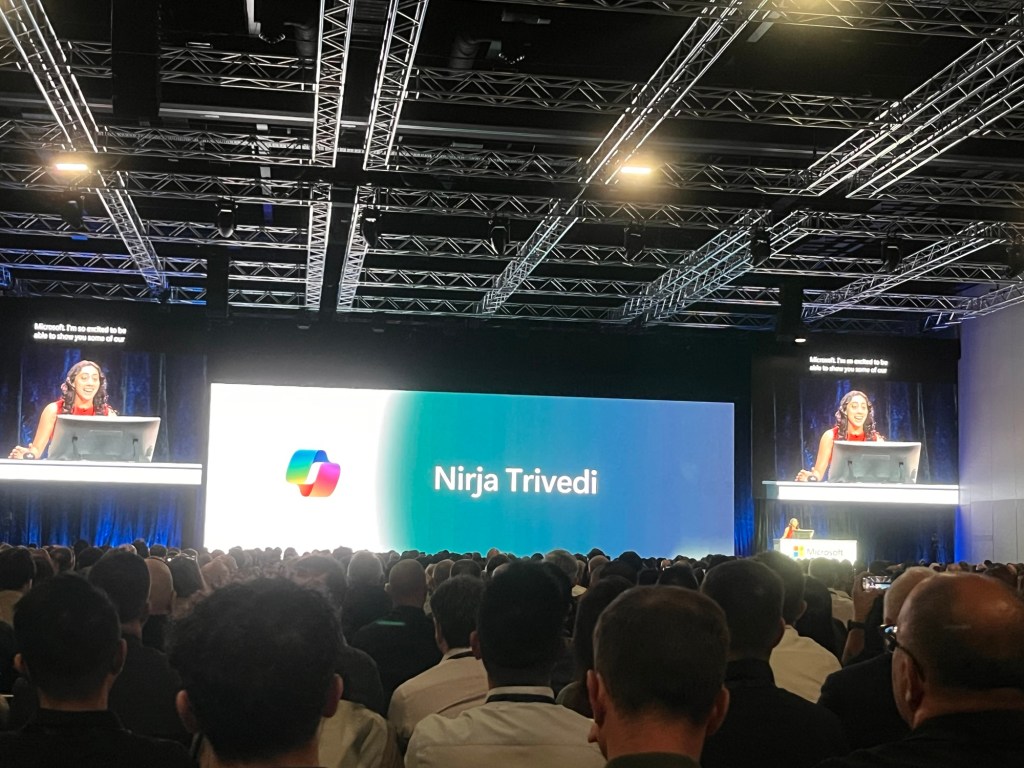
BONUS: The most memorable demo of the day came from Nirja Trivedi, Copilot Marketing Manager, whose depth of product knowledge and storytelling ability set a benchmark I’ll be referencing with my own team for a while. I have read about Nirja’s journey, building her confidence to present in front of 200 people a year ago, to presenting with Satya Nadella to a crowd of thousands. This is so inspiring, showing that anyone, with the right support, can achieve something amazing.



 Scaling Beyond
Leave a comment