Over the last couple of years, I’ve been interested in organisational psychology and neuroscience, looking to better understand the processes within our bodies that enable us to collaborate well, communicate clearly and build team cultures based on trust.
I’ve found that there are two complex chemicals that have a significant impact on our behaviour and social interactions every day: dopamine and oxytocin. These two chemicals influence how we show up at work, how motivated and creative we feel, how well we focus, how we build trust within teams, form healthy habits and so much more. There is some fascinating research published and emerging in this area, and there is a lot we can learn from it when building a sustainable high-performance culture.
By a sustainable high-performance culture, I mean an environment that drives strong results and fosters employee satisfaction, where work feels motivating and rewarding without tipping into burnout. Achieving that balance within co-located teams is challenging enough. But is it possible when face-to-face contact is limited in companies with a hybrid or fully remote workforce?
The good news is that it absolutely is possible to build cultures that thrive, even at a distance, it just takes a bit more intention and effort. In this post, I want to share some of the strategies I’ve learned and explore what’s worked for me and other leaders who shared their experience with me.
Why Understanding Dopamine and Oxytocin Matters
We all need both dopamine and oxytocin to truly thrive at work, regardless of gender or our role. This includes individual contributors, team leaders and managers as well as senior leaders.
- Dopamine is a neurotransmitter often called the “reward chemical.” It fuels motivation, focus, goal-setting, and feelings of accomplishment.
- Oxytocin is sometimes called the “bonding hormone” or “trust hormone.” It’s released through positive social interactions and fosters trust, collaboration, emotional safety, and loyalty. It is well researched in a family context – from the birth of a child to mother & child bonding, but it is equally important in any social context including our professional lives.
If you’ve ever felt burnt out, chronically distracted, or like you’re stuck in endless busywork, chances are your dopamine system was out of balance. If you’ve felt disconnected from your team or found collaboration draining instead of energizing, low oxytocin levels could have been a big factor.
Reflecting back on my ~20 years in a workplace, I can certainly pinpoint plenty of moments like this…and in hindsight, each of them had an impact on my performance. The good thing is that even small changes in ways we run our meetings and workshops, and how we organise our workflow can make a big difference. Building an understanding of the ‘why’ is a good first step towards improving the outcomes for ourselves and the people around us.
How Much is “Good”?
There is more research emerging on this topic – but overall there seems to be a consensus that there is no ‘ideal level’ like it is with blood pressure, blood sugar or cholesterol. Certainly, actually measuring our levels in a workplace would not be practical. So, what should we aim for?
Dopamine: You want enough dopamine from the right sources to feel motivated, focused, and energized, but not so much that it leads to stress, impulsivity, or addiction to “quick wins” like constant notifications. Watching out for these unhealthy dopamine sources (on social media, notifications etc.) is a good idea! There is also more research specifically looking into dopamine levels of neurodiverse individuals, for example people with ADHD who may have an increased need for dopamine as part of their workflow (bullet journaling, anyone?). This is important to understand especially for managers working in science, highly technical or creative fields which may have a higher proportion of neurodiversity.
Oxytocin: The goal at work is to create conditions where oxytocin is released naturally through trust, genuine recognition, emotional safety, and healthy social connection.
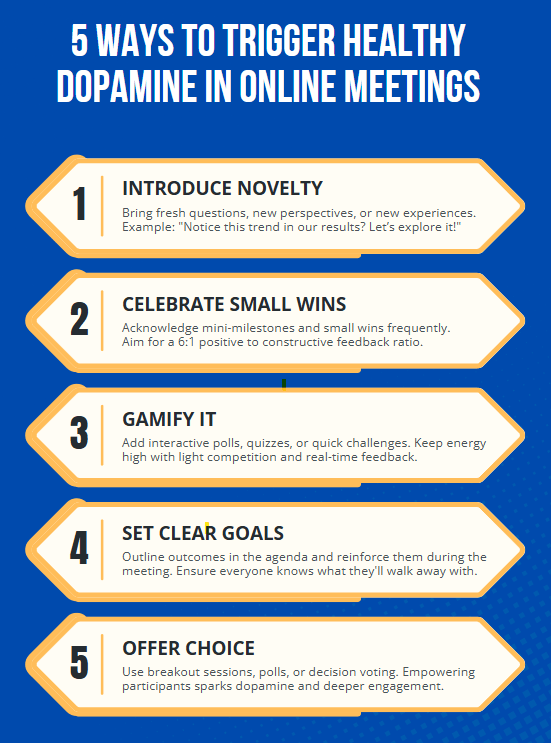
Ways to Trigger Healthy Dopamine
Here are some things to consider to create healthy sources of dopamine drive motivation and focus:
Remote Culture & Oxytocin
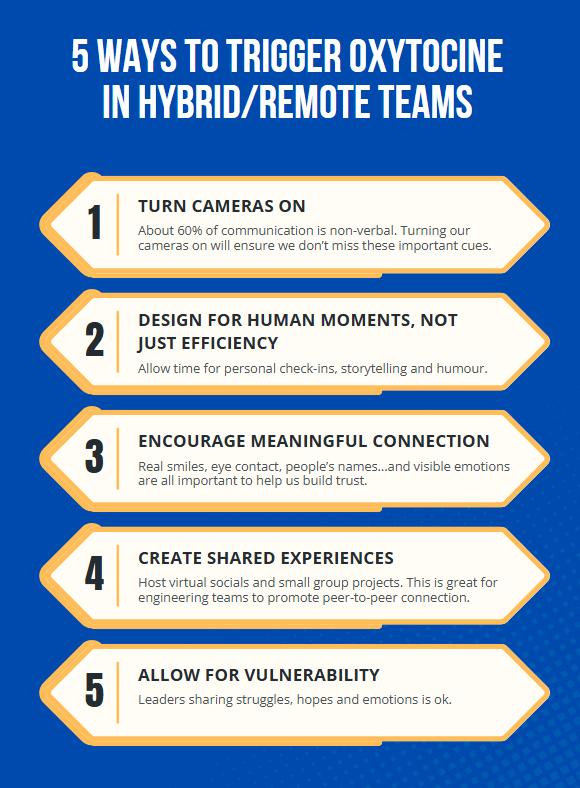
Fostering a culture that creates an environment of empathy, trust and belonging helps unite the team around shared goals.
Some things to consider:
Performance by Design
When targets are high and pressure is on, it’s easy for teams—especially remote ones—to skip some of the things listed above. Focus on going straight to the point, straight to numbers, cameras off etc. This may, over time, create low oxytocin and/or unhealthy dopamine patterns. Left unchecked, this can quickly spiral into stress, distrust, and even toxic behavior for some people or teams.
Reflecting on any conflicts and challenges at work, I usually find that they are rooted in the lack of communication… which may seem obvious. But fixing it may not be as straightforward, especially with geographically distributed and remote teams. With what we know about oxytocin, we can reflect on ‘when was the last time we met in person’, ‘did we have our cameras on in our last online call’, ‘what did we learn about each other in our last conversation’? When we can’t answer these questions, it may be that it’s not just the amount of communication but the type that may be the problem.
With awareness and intentional action and regular reflection, both dopamine and oxytocin levels can be nurtured, even in remote or hybrid environments. It’s all about small changes, built into daily workflows.
In summary
High-performing teams aren’t built by accident. They are built by design, and powered by chemistry that is innate to us as human beings.
Oxytocin, the chemical of trust and connection, is released through shared experiences, small acts of recognition, and authentic leadership. Dopamine, the chemical of motivation and reward, is triggered by clear goals, progress, and celebration.
In remote and hybrid environments, being intentional about activating these powerful neurochemicals isn’t optional — it’s essential.



 Scaling Beyond
Leave a comment